Short answer: most of you should.
Longer answer: it depends on where you sit in the market, and there's one group that should flip this advice completely.
Here's how we think about it, and what happened when a client put a number on their site.
Price is one of the first things families look for
Look at what people actually search, or ask AI, about a senior living community or a home care agency.
It's usually some version of three questions. Who are you? What do you do? How much does it cost?
Price is right up there. On the senior living websites we manage that publish pricing, the pricing page is usually the third most visited page on the whole site.
That's not because families are cheap. It's because price is a filter.
The sooner a family can figure out "this is roughly in our range" or "this isn't for us," the sooner they can make a decision. If your website helps them do that, you're saving everyone time, including your sales team.
What happened when a client posted a base price
A senior living client of ours with two communities in the Portland area added a "starting at" base price to each community's website, plus a short explanation of what goes into the final cost.
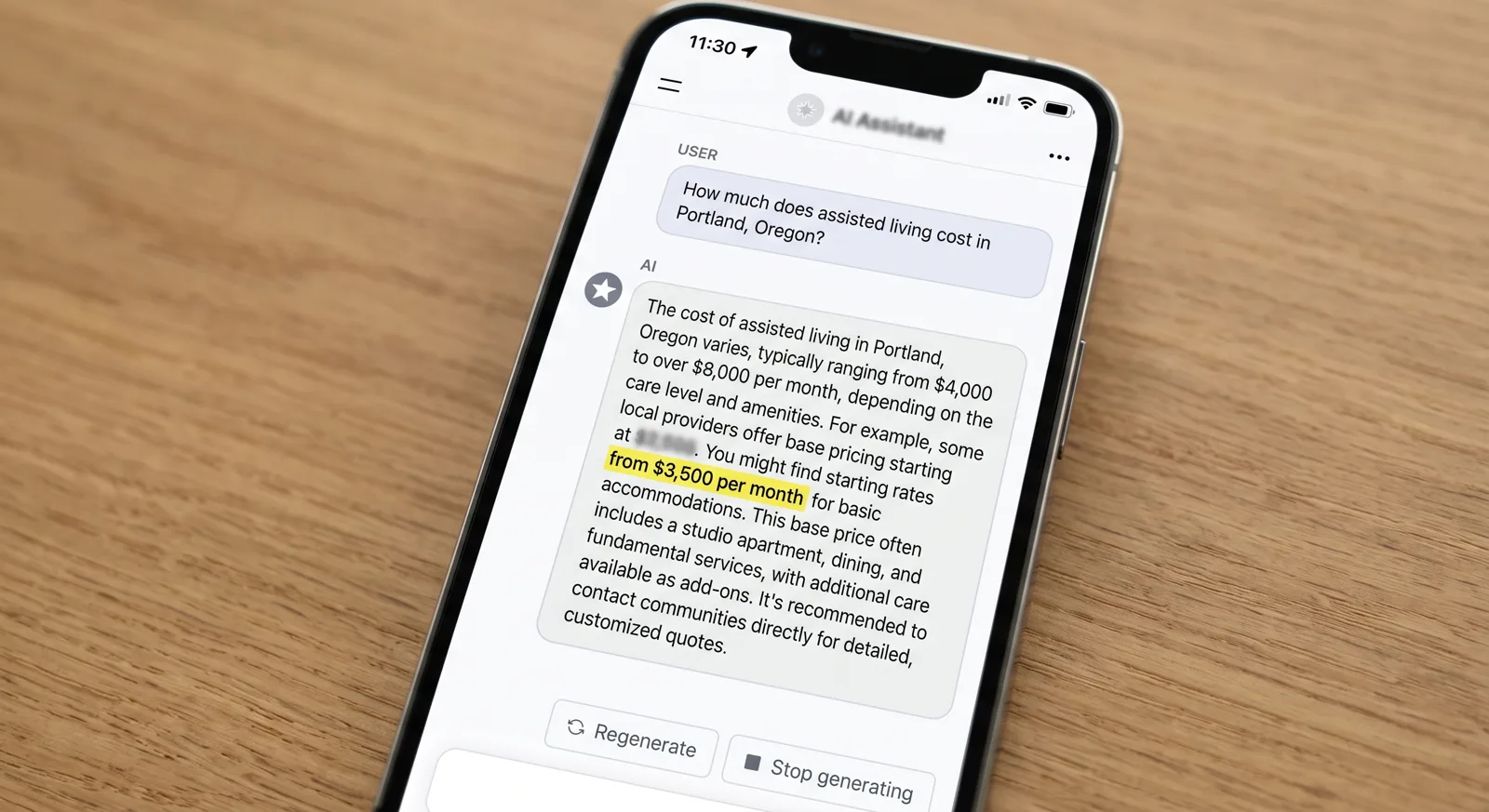
Today, when someone asks ChatGPT what assisted living costs in their area, both communities can show up in the answer, and AI now quotes their base price.
Think about how big that is.
That's one of the most asked questions in the whole industry. And AI can only quote a price it can find. If your number isn't anywhere, you're not part of that answer. Your competitor who posted theirs is.
And the leads got better. Families who call have already seen the number. They're not calling to find out whether they can afford you. They're calling because they think they can.
The part nobody tells you: your directories have to match
Here's the catch. It didn't happen overnight.
It took a while for AI to pick up the base price. And putting it on the website wasn't enough.
Almost every senior living directory lists a base price too. A Place for Mom, Caring.com, and a long list of smaller ones. And for most communities, those numbers don't match.
That's usually not anyone's fault. Prices change. Communities switch marketing agencies. Someone updated the website and nobody went back and fixed the 15 directory listings from three years ago.
So AI sees five different prices for the same community. When the sources disagree, it's less likely to quote any of them, and less likely to show you at all for pricing questions.
We had to go back and make the base price consistent everywhere it appears. That consistency, plus steady effort over time, is a big part of why AI started citing our client's price.
If you post a price, post it everywhere, and keep it current.
The exception: luxury communities
If you run a luxury or higher-end community, I'd flip the advice.
For you, the experience has to come before the price.
People will pay more for something they've already fallen for. If they see the number first, they filter you out before they ever walk the grounds, taste the food, or meet the staff.
So lead with the experience. Get them on a tour. Let the price conversation come after they can picture themselves there.
Everyone else: post a base price
If you're not luxury, you're probably not competing on luxury. You're competing for families who need to budget.
And that's most families.
Most people moving into senior living don't have millions in the bank. They want a place where the money lasts. Even families who aren't strict about it are doing that math in the background.
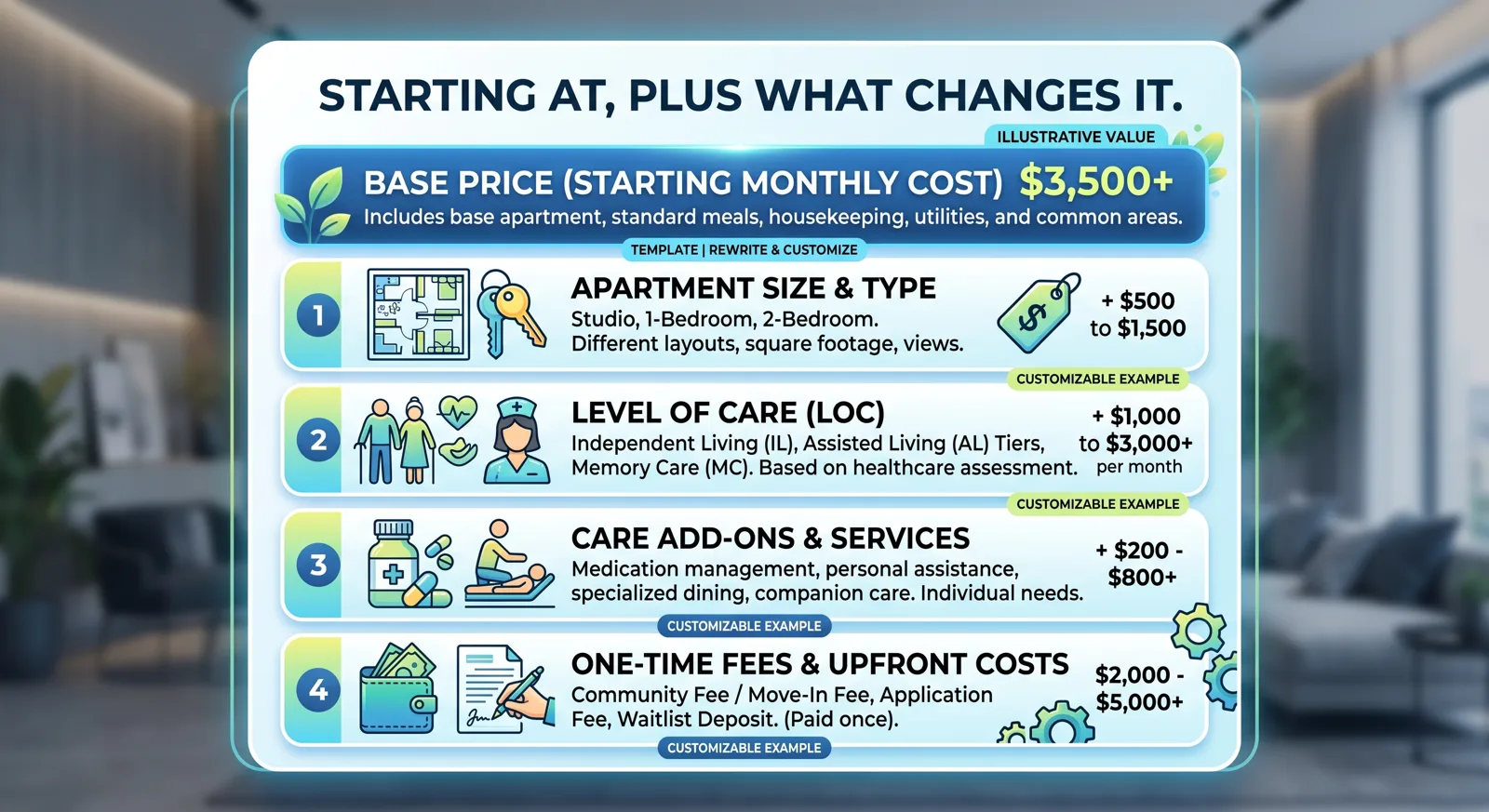
So give them a starting point. A base price for the apartment, before care. Then explain, in plain language, what changes it:
- Apartment size and type
- Level of care needed
- Care add-ons or services
- Any one-time fees
"Starting at" plus "here's what affects your price" is honest, it's useful, and it's something AI can actually quote.
Home care tends to be quieter about price
In our experience, senior living sites will often say "starting at." Home care agencies usually say nothing at all.
That's a missed opportunity. Home care cost is a common search on its own. Even an hourly range, or a clear explanation of what drives the cost, puts you ahead of the agencies that make families call just to get a ballpark. We have written before about how home care can frame price.
When not publishing makes sense
There are real reasons to keep pricing off your site.
Managed Moves, one of the senior move managers we work with, is a good example. Krista, one of their co-owners, walked us through it. In Oregon, moving companies operate under state rules about what they can charge for different services.
Oregon's rules say final charges for household goods moves "are based on rates that have been approved by ODOT and published in a tariff regardless of any estimate." (OAR 740-060-0010)
So for a lot of their moving services, a price list on the website wouldn't set them apart. The rates are set by regulation, not by competition.
That's a good reason. "We're worried the competition will see it" usually isn't. They can call you and ask.
Timing the price conversation
Here's the nuance. Price on your website is good. A detailed price conversation too early, especially on the phone, can go badly.
Unless a family has a lot of money, senior care cost is almost always a shock. It's always more than they expected.
And when you're trying to be open and honest, it's tempting to say, "It could go up to this much." That upper number can scare people right out of the process. We've seen it end with "thanks for the information, we'll be in touch," and then nothing.
Price is rarely the first question families ask on a call, even when they ask it early. Something brought them to you. Usually it's a story about mom or dad. Hear the story first. Then talk about cost in a way that fits it.
So: starting price on the website, so families can filter. Full price conversation once you understand their situation.
What to do this week
Ask AI how much your type of care costs in your city. Use an incognito window.
See who it names. See whose numbers it quotes.
If it's not you, and you're not a luxury brand, it's time to put a starting price on your site.
Greatness Digital is a digital marketing agency in Oregon that works only with businesses that serve seniors: senior living communities, home care agencies, placement advisors, elder law firms, and senior move managers.
Not sure how to handle pricing on your site? Let's talk it through.
Frequently asked questions
- Should senior living communities list prices on their website?
- Most should list at least a starting price. Families use price to filter their options early, and AI tools can only quote prices they can find. Luxury communities are the main exception, because the experience should come before the price for them.
- What is a base price in senior living?
- A base price is the starting monthly cost for an apartment or room before care services are added. Most communities add care fees on top, based on the level of help a resident needs.
- Does showing prices online hurt lead volume?
- It can lower the number of calls from families who can't afford you, which is usually a good thing. In our experience, the leads that come in after a base price is published tend to be better qualified.
- How does AI decide what senior living costs in my area?
- AI tools pull from websites, directories, and articles that mention real prices. If your community publishes a clear starting price, AI can include it when someone asks what care costs locally. If you don't, it will quote someone else.
- Why doesn't AI show my senior living community's price?
- Usually because it can't find one consistent number. If your website, Google Business Profile, and senior living directories list different base prices, AI tools are less likely to quote any of them. Publish one starting price and make sure it matches everywhere your community is listed.
- When should pricing come up on a sales call?
- After you understand the family's situation. Leading with the highest possible cost can scare families away. Share the starting price and what affects it, then talk about the real number once you know what care is needed.