If you invested in SEO before AI search took off, your website traffic has probably dropped.
That's true for most of the clients we have who did SEO the old way.
And for a lot of them, the leads went up anyway.
So no, SEO isn't dead. But the scoreboard changed, and if you're still watching the old one, you're going to make bad decisions.
A client whose traffic slid and leads climbed
An elder law firm we work with is a good example.
Their organic traffic had been slowly declining for years, even before AI. For a long time they'd posted the kind of cookie-cutter blog posts a lot of firms publish. Funny enough, some of those still rank in positions four to seven on Google.
But overall, traffic kept sliding. In March 2025, their site got 970 visits from organic search. By July 2026, with AI Overviews answering more questions right on the search page, it was down to 287.
That's a 70% drop.
Here's the thing. Every time we talked with the owner, he said the leads were getting better. Better quality. More of them.
Then we rebuilt their website to be technically sound and clear about exactly what they do. His reaction: "We're getting flooded."
The numbers back him up. In the new site's first full month, September 2026, it logged 73 form submissions and 24 click-to-call taps. Organic search was still only 405 visits that month, well under the 970 from a year and a half earlier.
Even the AI channel is starting to show up. That same month, 7 visits came from AI assistants like ChatGPT. Two of them turned into leads.
Fewer visitors. More, better leads.
It's not just one client
A senior living operator we work with, with communities across the Northwest, shows the same pattern at a bigger scale.
Comparing September 2025 to September 2026, their organic search visits fell 31%, from 6,723 to 4,640.
Their leads from organic search fell only 12%, from 123 to 108.
So each visit is worth more. The share of organic visitors who became a lead went from 1.8% to 2.3%.
That's the shift in one line. Fewer people click. The ones who do are readier to talk.
Why that happens
Eric put it well on our call: Google is a customer service business.
Its job is to give people the best answer to their question. And people's questions have changed.
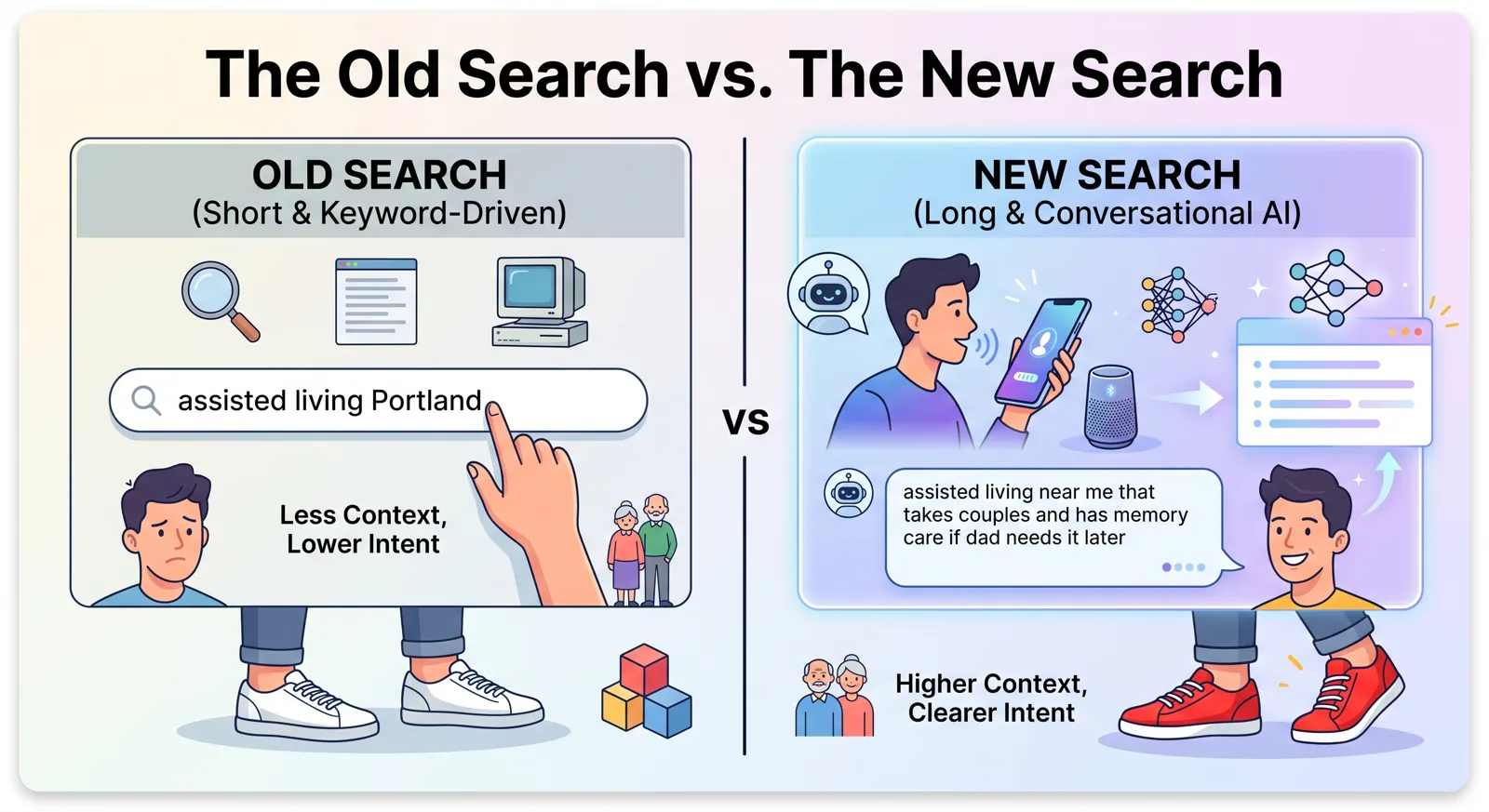
It used to be "red shoes near me." Now it's "red shoes that help me run faster and won't hurt my feet."
In senior care, it's not "assisted living Portland." It's "assisted living near me that takes couples and has memory care if dad needs it later."
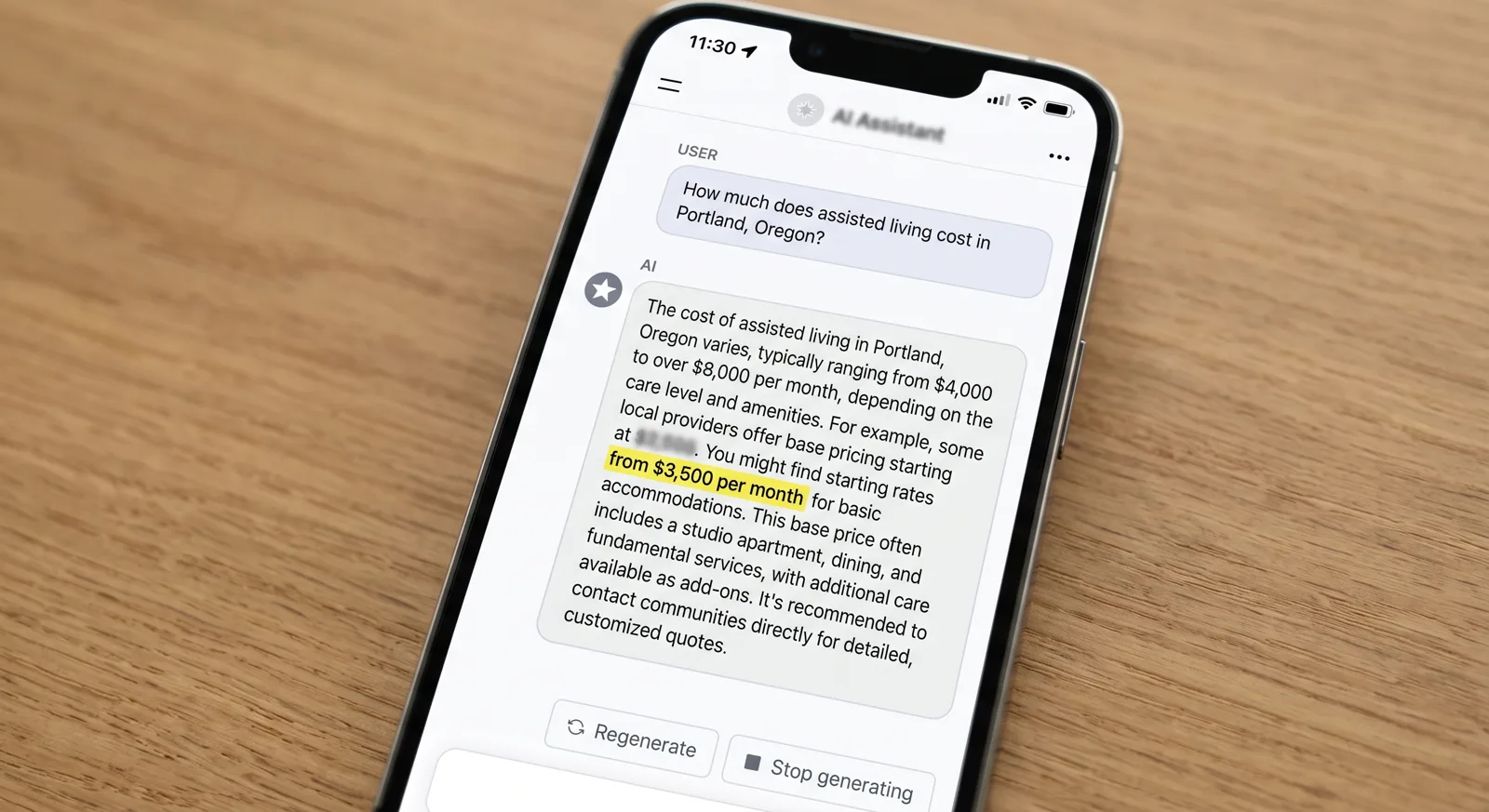
Searches are longer and more conversational. AI answers a lot of the simple questions before anyone clicks.
So the people who do click through to your site are further along. They've already done some homework. They're closer to calling.
That's why traffic can go down while leads go up.
Organic is the bedrock for everything else
When we rebuilt that elder law site, Google finally understood it clearly: this is an elder law firm, this is what they do, this is where they do it.
And then everything else we were doing started working better. Google Ads. Meta ads. All of those signals now pointed at a site Google trusted.
That’s the part people miss. Organic is the bedrock of everything else.
If you can't convert someone you earned, you won't convert someone you paid to get there.
Organic shows you how people really behave on your site. If they don't call or fill out a form when they arrive for free, paying to send more of them won't fix it.
What to check first when traffic drops
Years ago, the first move when a client said "our traffic is down" was to open the analytics tools and start digging.
That still helps. But now, you can learn a surprising amount just by looking at the website.
Here's Eric's first pass when a prospect tells us traffic is down:
- Look at the top half of the homepage. What does it say? What's the main call to action? Is it obvious what to do next?
- Check how it loads and flows. Slow, confusing pages lose people fast, especially older visitors on phones.
- Check what it's telling Google. A quick technical look: is it clear what you do and where?
- Ask what you used to do that you stopped. Did you stop blogging? Stop asking for reviews? Stop posting on social?
That last question finds the gold nugget more often than not.
Something used to be working and quietly stopped. Usually it's one of the "that didn't seem to do much" activities.
Those blogs did more than you think
A lot of owners tell us, "We paid an SEO company to write a bunch of blogs, and they didn't get any traffic."
Maybe not much traffic to those specific pages. But fresh, useful articles do more than pull in searchers.
They earn links and mentions from other sites. They build up Google's understanding of what you know and what you're an authority on. They give AI tools something real to cite.
One rule, though: only write about what you actually know. That's how this works now.
The only number worth tracking
Track leads.
Calls. Form fills. Chats. Tour bookings.
Engagement metrics like time on page are still useful signals that you're headed the right way. But at the end of the day, it's about how many families raised their hand.
It used to be enough for an agency to say "we drove 250 people to your website last month." It's not anymore. Nobody cares about visitors that didn't call.
That means SEO now includes the conversion. The website has to be built to turn the visitors you do get into conversations.
And sometimes a scary drop isn't even real. We wrote about a time a report showed a decline that never happened.
Try this
Pull two numbers for the last 12 months: website sessions and total leads.
Put them side by side.
If sessions went down and leads held steady or went up, your SEO isn't failing. Your scoreboard is.
Greatness Digital is a digital marketing agency in Oregon that works only with businesses that serve seniors: senior living communities, home care agencies, placement advisors, elder law firms, and senior move managers.
Watching your traffic fall and not sure what it means? Let's look at the real numbers together.
Frequently asked questions
- Is SEO dead for senior living and home care?
- No. Traffic has dropped for many sites because AI Overviews answer simple questions directly, but the visitors who still click through are often further along and more likely to call. A clear, technically sound website also makes paid ads and AI visibility work better.
- Why is my website traffic down but my leads are up?
- AI search and longer, conversational searches mean fewer people need to click to get basic answers. The people who do visit are usually more serious, so fewer visits can still produce more and better leads.
- What should I track instead of website traffic?
- Leads: phone calls, form fills, chats, and tour bookings. Engagement metrics are useful signals, but leads show whether your marketing is actually working.
- What should I check first if my website traffic drops?
- Start with the website itself. Look at the main message and call to action, how the page loads, and whether it clearly tells Google what you do. Then ask what marketing activity you stopped, such as blogging, review requests, or social posting.
- Do blog posts still help SEO if they don't get much traffic?
- Yes, if they're useful and written by people who know the topic. They can earn links and mentions, build authority with Google, and give AI tools credible content to cite.