When a family calls a senior care business, they're scared and a little lost.
And within about ten seconds, they're deciding one thing: does this person actually get my situation, or not?
You know what tips it? The words.
When you use the right language, families exhale. It's the biggest sigh of relief in the world. "Oh good. I'm in good hands."
So here's the plain-English guide to the terms that matter, whether you're a family trying to understand your options or an operator who wants to sound like the expert you are.
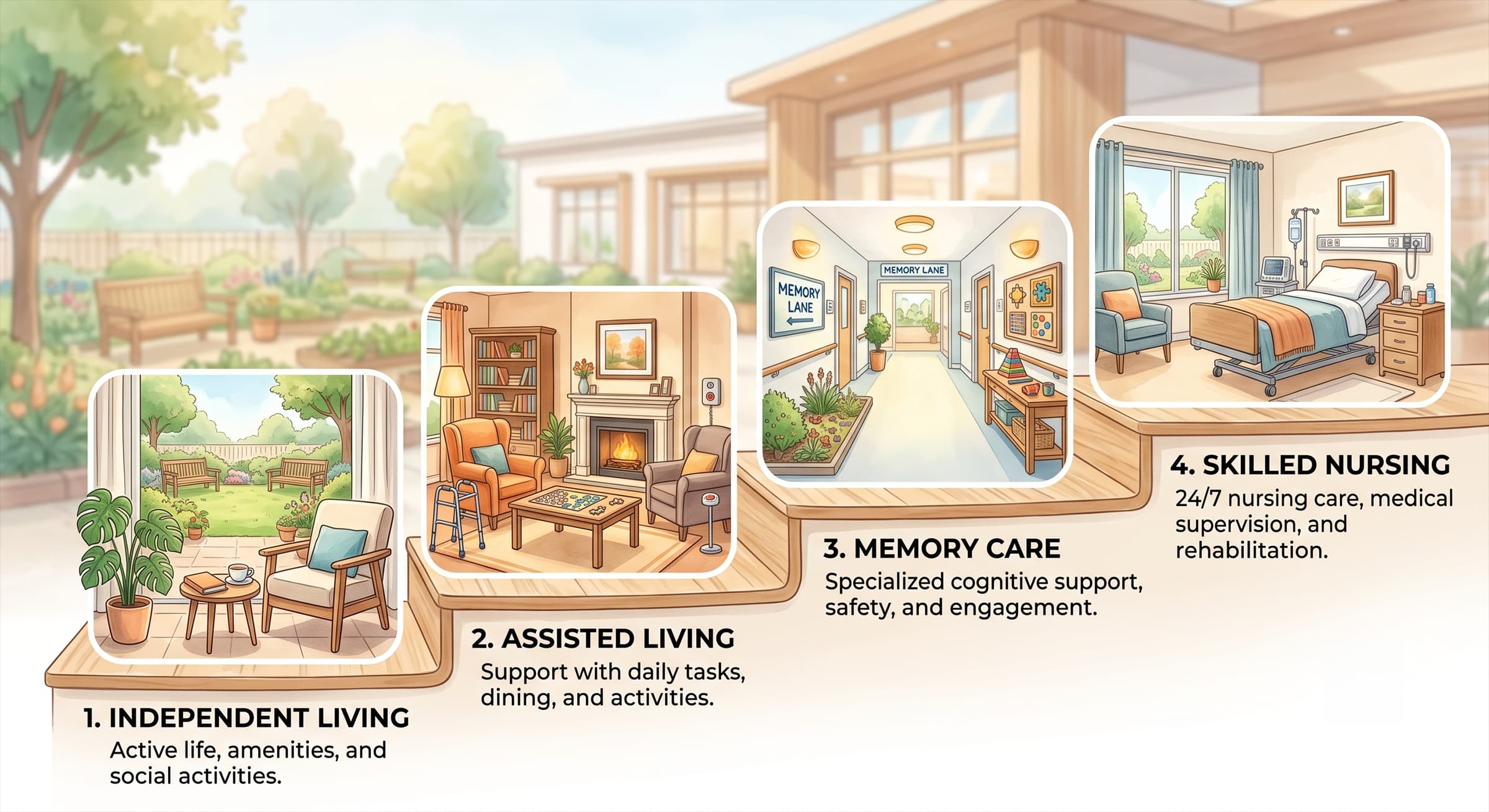
The levels of senior living
Independent living is housing for active seniors who don't need daily help. Think apartments or cottages with social activities, meals, and no medical care built in.
Assisted living adds help with daily tasks. Bathing, dressing, medication reminders. Residents are fairly independent but need a hand, and staff are there when they do.
Memory care is assisted living designed for people with Alzheimer's or dementia. It's a secured setting with staff trained specifically for memory loss.
Skilled nursing, sometimes called a nursing home or SNF (people say "sniff"), is the highest level of daily care outside a hospital. Licensed nurses on site around the clock, plus rehab and complex medical needs.
Assisted living vs skilled nursing, in one line
Since this is the question families ask most, here's the short version.
Assisted living is help with daily life. Skilled nursing is ongoing medical and nursing care.
If Mom mostly needs a hand with day-to-day tasks and some supervision, that's assisted living. If she needs licensed nursing care every day, that's skilled nursing.
Most families overestimate the level of care they need at first. Part of the job is helping them figure out where they actually land.
Home care vs home health (they are not the same)
This one trips up almost everybody, and using them interchangeably is a dead giveaway that someone doesn't know the field.
Home care is non-medical help at home. Companionship, meals, help with daily tasks, a little housekeeping. No doctor's order required.
Home health is medical care at home. Skilled nursing visits, physical therapy, wound care, ordered by a doctor and usually short-term.
Simple way to remember it: home care helps with living, home health helps with healing.
Medicaid vs Medicare (the mix-up that costs families)
These sound alike and cover very different things, and getting them confused can cost a family real money.
Medicare is federal health insurance for people 65 and older. It covers medical care: hospital stays, doctor visits, short-term rehab, and some home health. It does not pay for long-term custodial care, the daily help most families are actually looking for.
Medicaid is a joint federal and state program based on financial need. For those who qualify, it does help cover long-term care, including nursing home care.
So when a family says "Medicare will cover the nursing home," that's usually the moment to gently walk them through the difference. Getting this right early saves a lot of heartbreak later.
One more you'll hear: ADLs
You'll see this everywhere in senior care, so it's worth knowing.
ADLs are Activities of Daily Living. The basics of taking care of yourself: bathing, dressing, eating, using the bathroom, moving from a bed to a chair, and continence.
Care levels are largely decided by how much help someone needs with their ADLs. It's the yardstick the whole industry uses.
Why this matters for your marketing
Here's the part operators need to hear.
This language isn't just jargon. It's a trust signal.
When your website, your ads, and your team all speak in these terms correctly, families feel understood before they've even met you. That feeling is worth more than any slogan.
It's also how we stay in our lane. Greatness Digital works only with businesses that serve seniors, so we speak this language every day. That's not a small thing, it's the difference between marketing that sounds like an insider and marketing that sounds like a stranger. You can see the full range of senior-serving businesses we work with here.
The bottom line
Families judge you fast, and the words you use are the tell.
Get the language right and they relax, because it means you understand the hardest decision they'll make this year.
That's not marketing polish. It's respect. And it's exactly what we help our clients get right.
Want your marketing to sound like the insider you are? Let's talk.
Frequently asked questions
- What is the difference between assisted living and skilled nursing?
- Assisted living provides help with daily activities like bathing, dressing, and medication in a residential setting. Skilled nursing provides around-the-clock licensed medical and nursing care, plus rehabilitation. Assisted living is for people who need some help with daily life; skilled nursing is for those who need ongoing medical care.
- What is the difference between home care and home health?
- Home care is non-medical support at home, such as companionship, meal prep, and help with daily tasks. Home health is medical care at home, like skilled nursing visits and physical therapy, ordered by a doctor. Home care helps with living; home health helps with healing.
- Does Medicare pay for assisted living or nursing homes?
- Medicare generally does not pay for long-term custodial care, including most assisted living and long-term nursing home stays. It covers medical care and short-term rehab. Medicaid, which is based on financial need, is the program that helps cover long-term care for those who qualify.
- What are ADLs?
- ADLs, or Activities of Daily Living, are the basic self-care tasks: bathing, dressing, eating, toileting, moving around, and continence. How much help a person needs with their ADLs is the main way senior care levels are determined.