I run a lot of paid campaigns for senior-serving brands, so I look at a lot of creative.
And I can tell you the tools got good. Not "good for AI." Good.
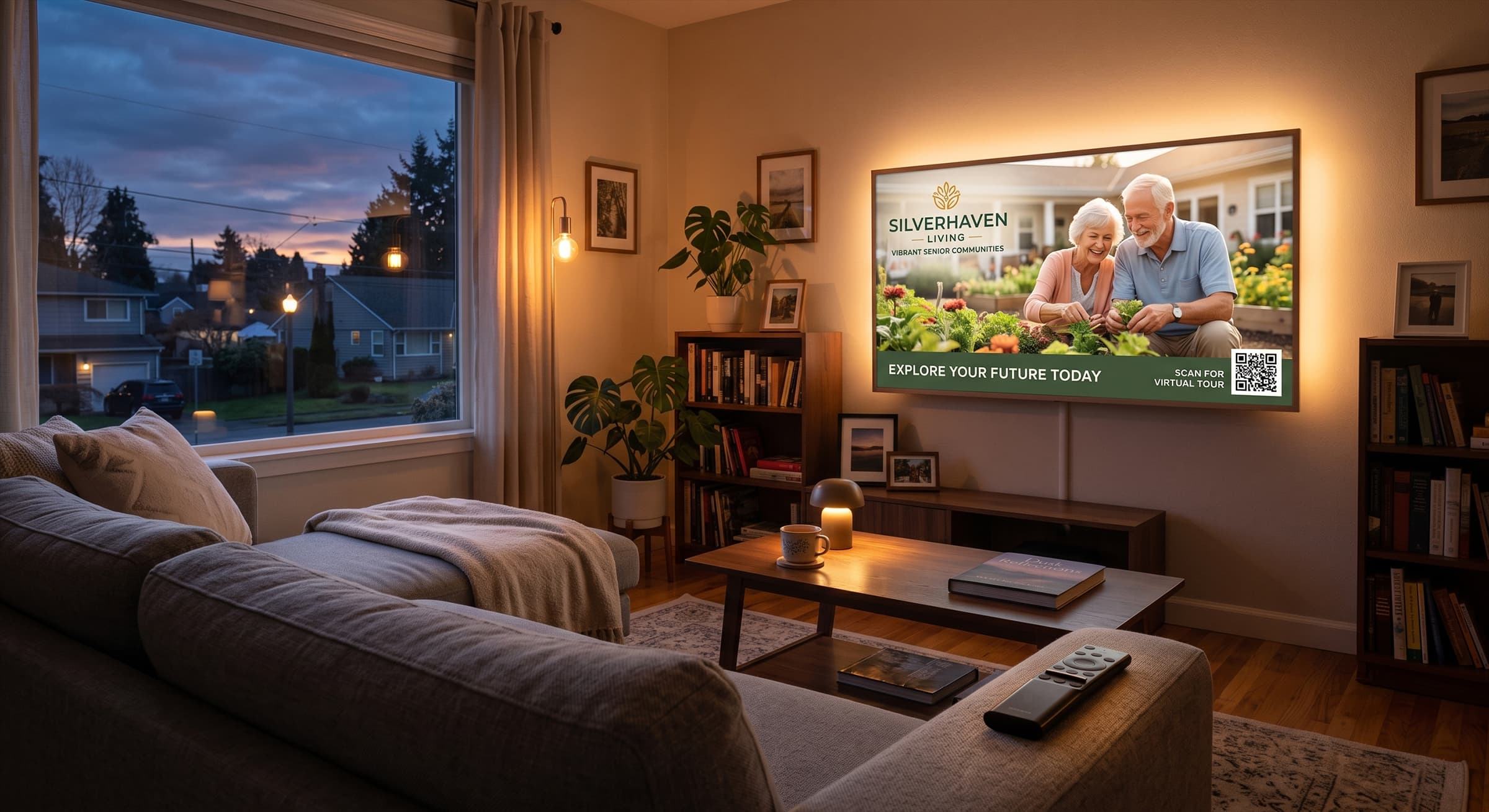
Video generation in particular has gone somewhere a little nuts in the last few months. You can produce a warm, sunlit scene of an older couple walking a hallway without a camera, a crew, or a permission slip.
So the question landed on our team session last week, and it is the right question: are we close to using AI-generated people in ads for senior living communities?
My answer is no. Not close.
But I do not think the answer is no forever, and I do not think it is no everywhere. Let me draw the line where I actually think it sits.
Why authenticity is not a nice-to-have in this industry
Every industry says it values authenticity. Senior care actually gets punished for faking it.
Think about who is looking at your ad. It is usually an adult daughter, mid-fifties, three weeks into a decision she has been avoiding for a year. She is not browsing. She is auditing you.
She is looking at the faces in your photos trying to answer one question: would my mother be happy here?
That is a comparison against reality. She will tour you. She will meet actual residents. If the people in your ads do not exist, she finds out, and what she learns is not "they used a tool." What she learns is that you were willing to fake the most emotionally loaded part of your pitch.
And you can tell. Even with the good tools, you can tell. Something in the eyes, the hands, the way a smile sits. Most people cannot name what is off, but they feel it, and feeling something is off is exactly the wrong reaction to trigger in someone deciding whether to trust you with their parent.
Zeth put it bluntly in our session, and I agree with him: if a family ever caught a senior-serving brand running AI-generated residents, it would discredit everything else on the site.
That is a lot of downside to accept in exchange for saving a photo shoot. It also runs against everything we know about how design earns trust in the first place.
The one exception I would actually consider
Here is where I break from the purists.
In-home care is a genuinely different problem.
Think about the practical reality. Your service happens inside somebody's private home, delivered to someone who may have cognitive decline, often during a personal moment. You cannot roll a camera crew into that. You should not want to.
So home care agencies end up with two bad options: stock photography that every competitor in the county is also using, or nothing.
Stock is its own kind of fake. Nobody believes that impossibly cheerful pair is your caregiver and your client. It is just a fake nobody bothers to object to.
If the choice is generic stock or a thoughtfully generated illustration of a scenario you actually deliver, I do not think generated is obviously worse. In some cases it is more honest, because you can depict what you really do rather than what a stock library happened to shoot.
The other legitimate use is architectural. A 3D walkthrough of a community, with generic figures for scale, sidesteps the model-release problem entirely and nobody is being deceived about who those people are. That is set dressing, not testimony.
The distinction I keep landing on: generate environments and scenarios, never testimony.
A hallway is a fact about your building. A face is a claim about a person.
The middle ground that gets uncomfortable
Zeth raised a case in our session that I still do not have a clean answer for.
What if the person is real, the setting is real, but AI extends the frame, cleans up the lighting, or composites your actual caregiver into a scene?
Is that retouching, which the industry has done forever? Or is it fabrication?
I do not know where that line is. I know it exists. And I know the tools are going to keep pushing us into that gray area faster than any of us build a policy for it.
My working rule until something better comes along: if a family saw exactly how the image was made, would they feel misled? If yes, do not run it. If it is boring to explain, you are fine.
Where policy is heading
One more thing worth putting on your radar, and I am forecasting here rather than citing law.
Everything points toward AI-generated content requiring disclosure. Platforms are building detection. Regulators are writing transparency rules. Anthropic just started watermarking Claude's text output worldwide to comply with an EU transparency code.
Assume that within a couple of years, AI-generated imagery carries a visible label in more places than it does now.
Now imagine that label on your hero image, next to a smiling resident, on the page where a daughter is deciding whether to book a tour.
That is the version of this decision I would plan for. Not because AI is bad, but because you do not want a compliance label doing your brand positioning for you.
What we actually do
We hire a videographer, and it is worth every dollar.
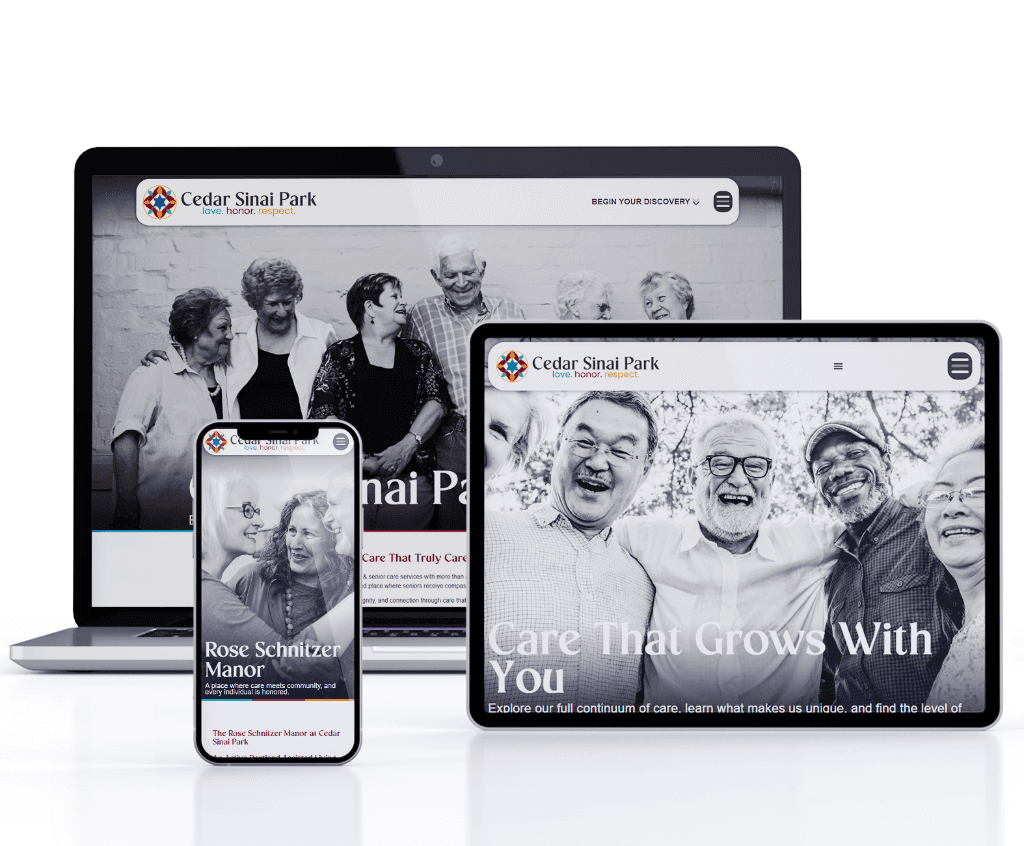
We shoot real residents, real caregivers, real dining rooms. Resident testimonials in particular hold their value for years, and they cannot be replicated by anyone else, which is the whole point. That footage then works everywhere: the ads themselves, what goes on the site, and streaming ads on a real budget.
Where we use AI heavily is everything around the asset: research, scripting, ad variations, targeting, analysis, figuring out which fifteen seconds of an eight-minute interview is the fifteen seconds that stops the scroll.
That split has held up well. AI on the process, humans on the proof.
Try this before your coffee is cold
Pull up your five best-performing ads and your homepage hero.
For each image, ask: is this a real person who is really connected to my business?
Count how many are yes.
If your answer is low, your problem is not that you need AI imagery. Your problem is that you need a half-day shoot, and it will outperform anything generated for the next three years. We can help you plan that.
The bottom line
Generate the room. Do not generate the person.
Environments, scenarios, and architectural visualization are fair game. Faces that imply a real resident, a real caregiver, or a real outcome are not, and in-home care is the only place I would even open the debate.
The reason is not that AI is unethical. We use AI all day. The reason is that in senior care, your product is trust, and trust is the one thing you cannot generate.
Greatness Digital works only with businesses that serve seniors, and you can see the businesses we work with here. If you want a look at whether your creative is actually earning that trust, let's talk.
Frequently asked questions
- Can senior living communities use AI-generated images in their marketing?
- They can, but they should not use AI-generated people who imply real residents, caregivers, or outcomes. Families compare your marketing to what they see on a tour, and discovering that the faces were generated damages trust in everything else you have published. AI-generated environments, architectural visualizations, and figures used purely for scale are much lower risk because nobody is being misled about a person.
- Is it ever acceptable to use AI-generated imagery in home care marketing?
- This is the strongest case for it. Home care happens inside private homes, often during personal moments, so authentic photography is genuinely difficult to obtain. The realistic alternative is generic stock photography that competitors also use, which is its own form of inauthenticity. A carefully generated illustration of a service you actually deliver can be more honest than stock, as long as it is not presented as a real client or a real caregiver.
- Will AI-generated marketing content have to be labeled?
- Policy is moving in that direction, though requirements vary by jurisdiction and are still developing. Platforms are building detection capability and regulators are writing transparency rules, including the EU AI Act's transparency obligations that took effect in August 2026. Businesses should plan on more disclosure rather than less, and should consider how a visible AI label would affect a page where families are deciding whether to trust them.
- What marketing images work best for senior living communities?
- Real residents, real caregivers, and real spaces, captured by a photographer or videographer. Resident testimonials are the highest-value asset because they build trust, cannot be replicated by competitors, and stay useful for years. The practical move for most communities is a single planned shoot that produces a reusable library of photo and video assets.
- Is editing a real photo with AI the same as generating a fake one?
- There is a spectrum, and the useful test is whether a family would feel misled if they knew exactly how the image was made. Color correction and cropping are ordinary. Compositing a real caregiver into a scene that never happened is closer to fabrication. If explaining the edit would be boring, it is probably fine. If explaining it would be awkward, do not run it.